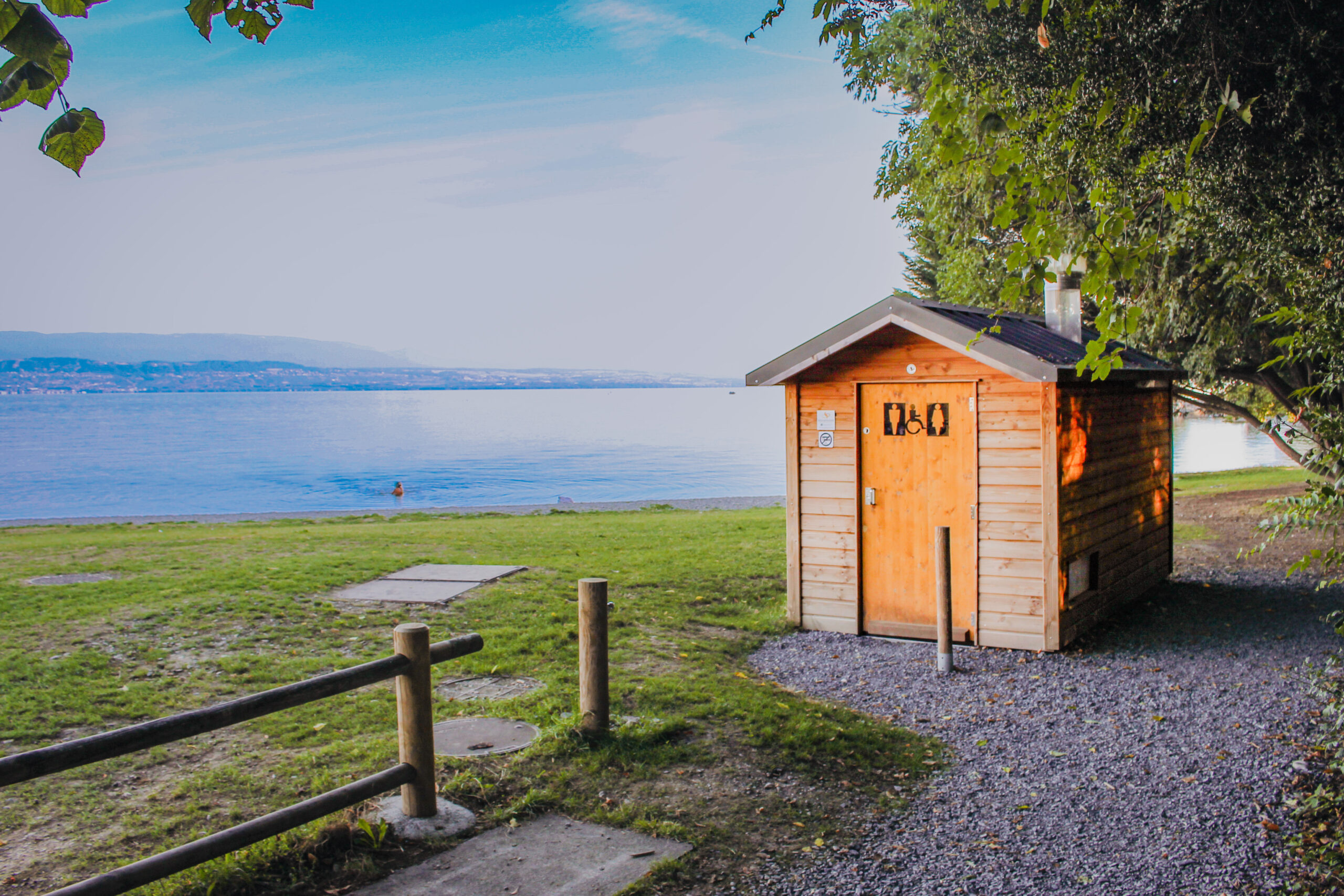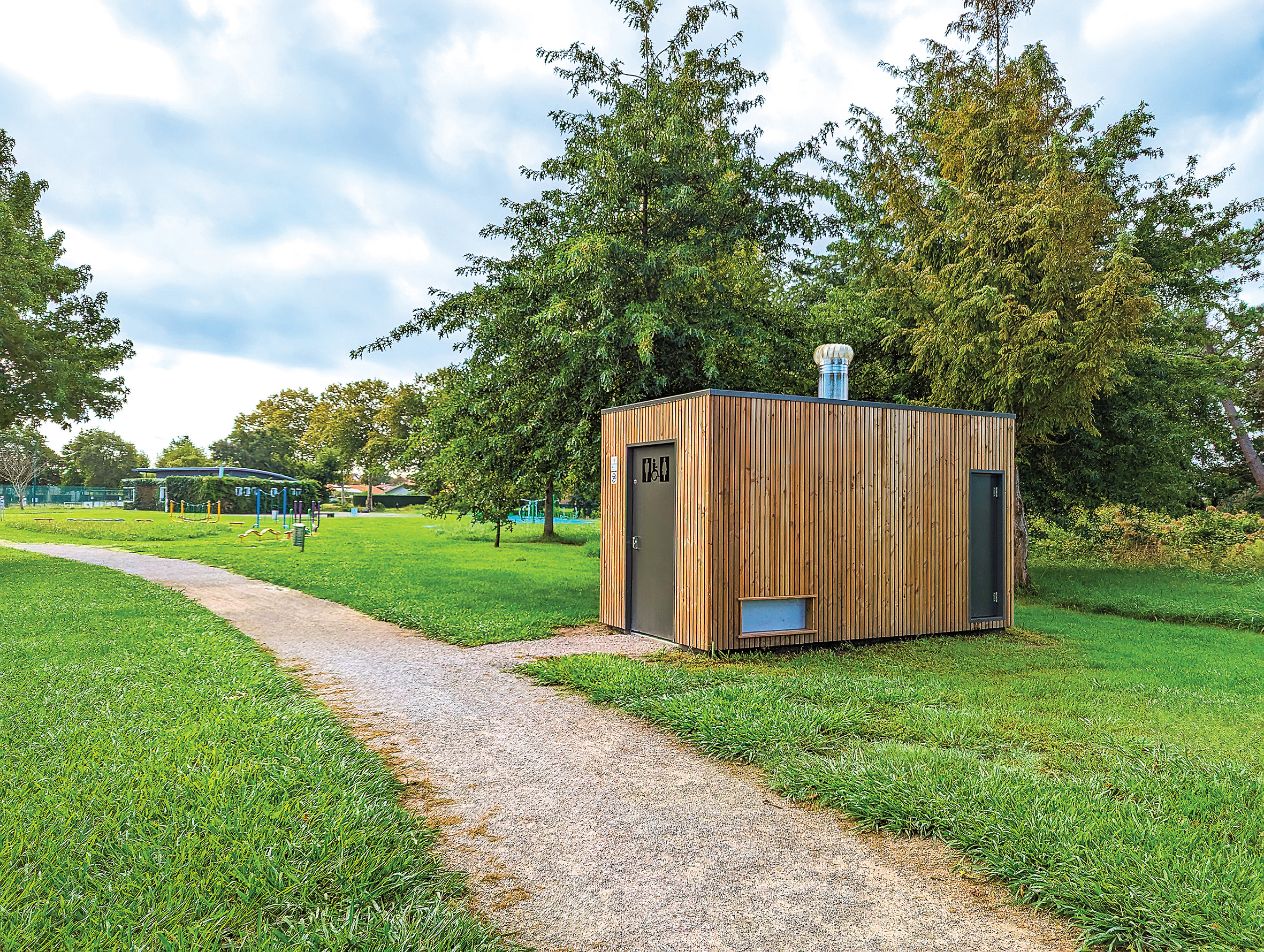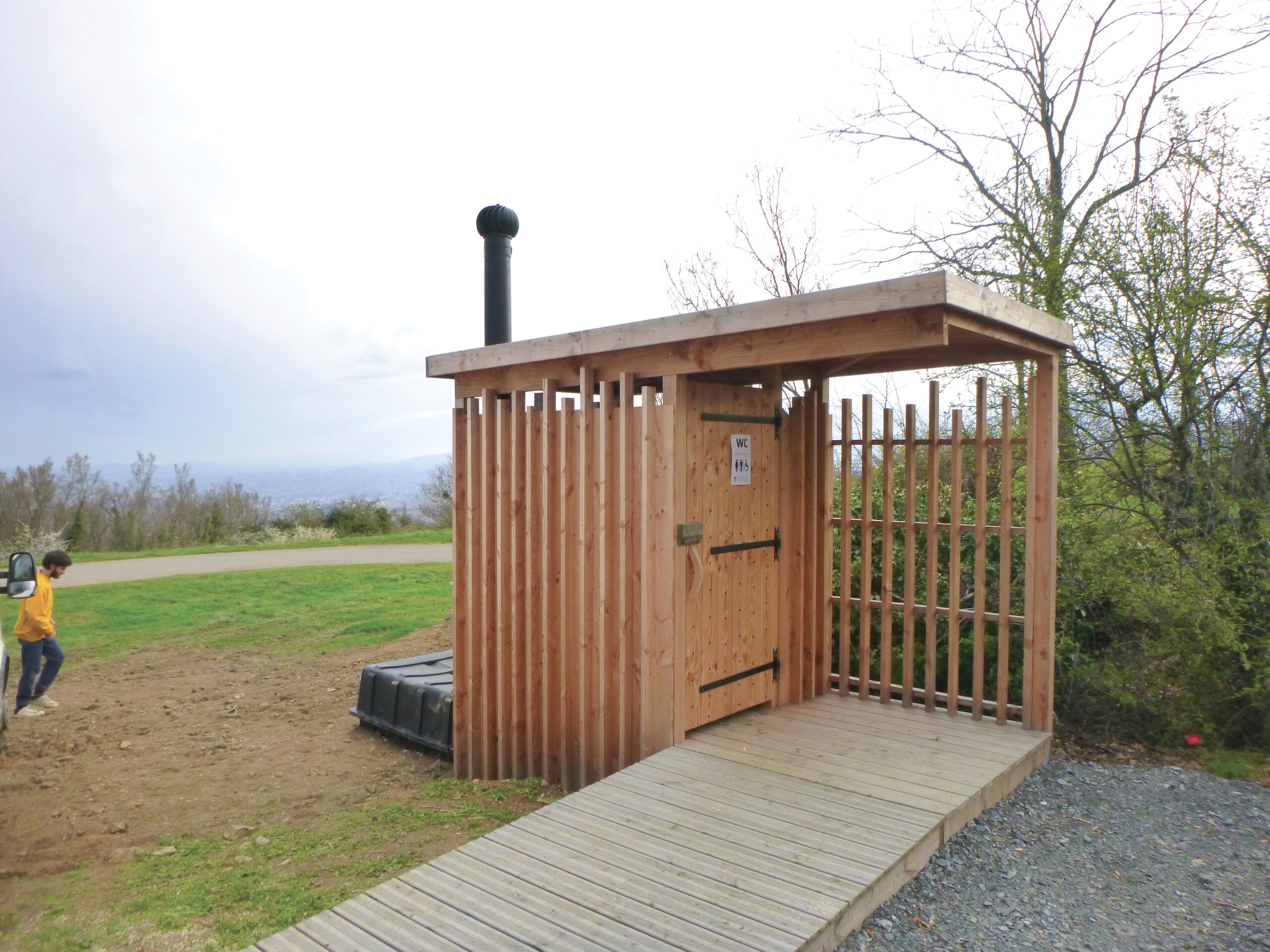

Social and environmental responsibility is not limited to broad procurement policies or carbon footprint assessments. It is also reflected in concrete operational decisions: how the company manages its resources, how it equips its sites, and how it reduces its environmental impact over the long term. SANISPHERE supports companies that wish to integrate dry toilets into a structured and credible CSR approach.
Why restrooms are included in sustainability metrics
Water has become a full-fledged environmental performance indicator in CSR and ESG frameworks. Companies are increasingly expected to account for their water consumption, whether in the context of non-financial reporting, customer requirements, or voluntary commitments.
However, restrooms account for a significant portion of water consumption at many sites. A standard toilet flush uses between 6 and 9 liters. At a site with several dozen employees or visitors per day, the annual volume is far from negligible. Replacing certain fixtures with dry toilets reduces this consumption to zero at the relevant points of use—a result that is measurable, documentable, and can be included in a CSR report.
The Tangible Benefits of a CSR Policy
The benefits of installing dry toilets as part of a corporate social responsibility (CSR) strategy extend across several areas. In terms of water use, the reduction is direct and quantifiable. Regarding waste, the byproducts of dry toilets can be recycled through composting, which aligns with the principles of the circular economy. In terms of operating costs, the lack of a connection to water and sewer systems reduces expenses at the sites in question.
These benefits are concrete, verifiable, and communicable. They can be included in a CSR report, a presentation to stakeholders, or a bid proposal that incorporates environmental criteria. For a company seeking to give substance to its environmental commitments, this is a tangible tool.
In what business contexts is this solution relevant?
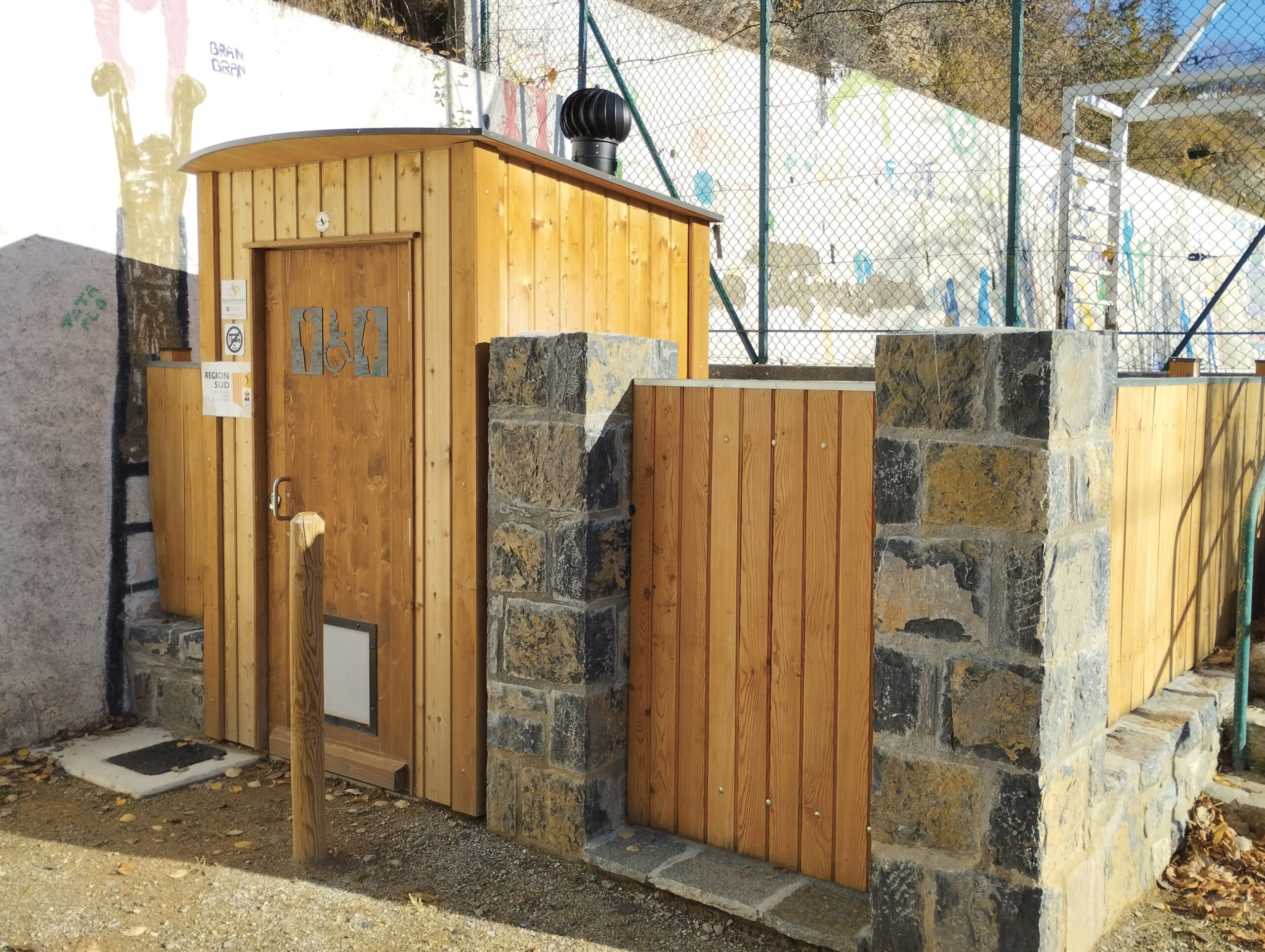
Dry toilets are not suitable for all business sites. They are suitable for sites with specific constraints: locations far from water and sewer systems, outdoor or semi-outdoor sites, temporary living quarters on construction sites, outdoor reception areas, and isolated production or storage areas.
They are also suitable for businesses that manage spaces open to the public or external visitors: industrial sites that offer tours, business parks, outdoor campuses, and outdoor recreational or dining facilities. In these settings, dry toilets offer a solution that is both functional and consistent with an environmental commitment.
Water, Operations, Maintenance: Measurable Benefits
Traceability is an asset in a CSR initiative. A dry toilet system generates measurable data: water savings, maintenance frequency, and the amount of byproducts recycled. This data can be used to update the company’s environmental dashboards and document progress from one year to the next.
SANISPHERE works with its clients to define monitoring metrics that are relevant to their specific context and to implement a maintenance service that ensures service continuity and operational quality over the long term.
How to Address This in a CSR or ESG Report
Including a dry toilet system in a CSR or ESG report requires presenting it from the right perspective: not as a mere anecdote, but as a deliberate choice rooted in a philosophy of sustainability and the circular economy.
The elements to be documented are: the reduction in water consumption (in liters or as a percentage), the reuse of byproducts, the resulting operational savings, and the context that led to this decision. These elements give substance to the commitment and make it credible to stakeholders, whether they are investors, customers, or employees.
The Most Common Internal Barriers and How to Overcome Them
The first obstacle is perception: some decision-makers still associate dry toilets with rural use or a makeshift solution. This perception does not hold up against the reality of well-designed and well-maintained professional facilities, but it must be addressed as part of the change management process.
The second obstacle is uncertainty regarding maintenance: who manages it, and with what resources? SANISPHERE addresses this issue with a structured support program that covers the entire life cycle of the installation. The third obstacle is the issue of acceptance by employees or visitors: this is addressed through the quality of the equipment and regular maintenance.
Launch a pilot project with SANISPHERE
The most effective way to overcome these obstacles is to start with a pilot project at a specific site or in a specific building. A limited rollout allows you to validate the system’s functionality, adjust protocols, and gather internal feedback before considering an expansion.
SANISPHERE supports this type of initiative. The goal is to provide the company with concrete information so it can make an informed decision on how to proceed.
Would you like to assess the CSR benefits of dry toilets for your site? Contact SANISPHERE for an analysis tailored to your specific situation. Discover SANISPHERE Solutions
Frequently Asked Questions
Can dry toilets be included in a company’s carbon footprint assessment? Indirectly, through reduced water consumption and the recovery of byproducts. These factors can contribute to the environmental indicators in non-financial reporting.
What type of business website is best suited? Outdoor locations that are isolated or have limited connectivity to utility networks are the most suitable environments. Construction sites, temporary housing camps, company parking lots, and outdoor reception areas are common use cases.
How can we convince internal decision-makers? A pilot project at a specific site provides concrete feedback, which is more convincing than a theoretical argument.
Are dry toilets accepted by employees? Acceptance depends on the quality of the equipment and the regularity of maintenance. Clean, well-designed equipment does not result in rejection.
Can SANISPHERE provide data for CSR reporting? Yes. By installing water usage sensors, you will receive a report that allows you to highlight water-saving data.